What's Going On?
Jordan is this week’s contributor to the Stay Woke publication.
Jordan is this week’s contributor to the Stay Woke publication. He has his own Substack Publication Jordan With Love. It will be at the bottom, please subscribe.
America is suffering from more contradictions than 21 savage last album, Retirement commercials promising serenity while markets free-fall. Financial firms speaking in tongues about “solutions” as the Dow nosedives. Politicians declaring victory while institutions hollow out. A man in Gaza pleading for his mother’s life sandwiched between sponsorships and public broadcasting bumpers. The signal isn’t subtle. It’s deafening.
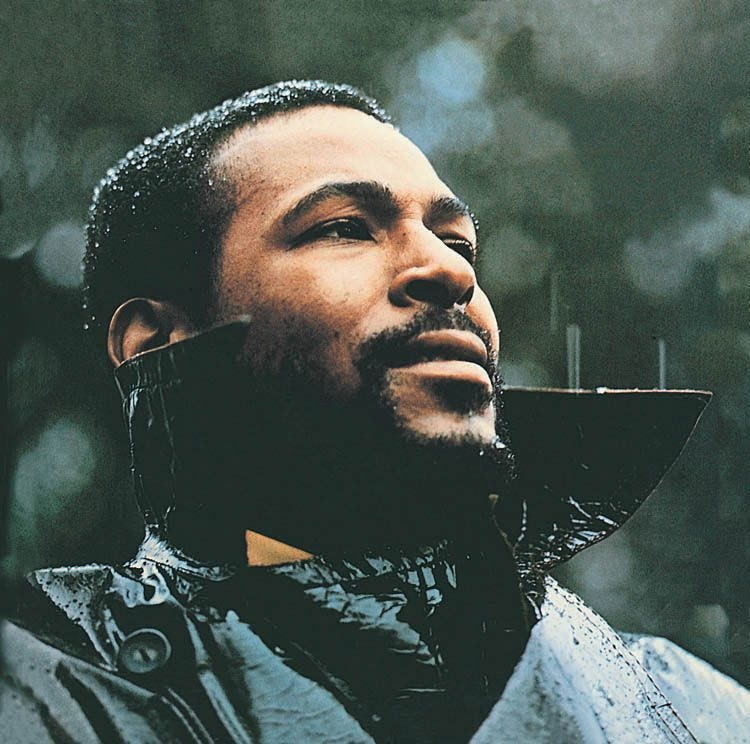
Marvin Gaye asked What’s Going On? in 1971, and the question still hasn’t been answered. If anything, it’s become harder to ask. In 2026, too much happens in a single week to even know where to start. Economic collapse cycles. War footage. Political spectacle. Corporate ads promising peace of mind while the floor caves in beneath you. The news moves faster than comprehension, and clarity is treated like a luxury good.
What’s happening isn’t chaos, it’s plutonomy. If you’re not familiar, plutonomy refers to an economic system organized around the wealth, power, and consumption of a tiny elite. Rather than growth being driven by the needs or stability of the broader population, the economy bends toward those already at the top. In this framework, inequality isn’t a byproduct, it’s the engine. Wealth concentrates upward, political influence follows the money and democracy slowly erodes as public policy prioritizes protection over participation. What emerges is an economy that looks productive on the surface but brittle underneath, incapable of sustaining shared prosperity, social trust, or meaningful mobility.
The promise was simple: work hard, build a life, own a home. That promise was broken not by accident, but by greed. Two generations were sacrificed to maximize returns.
In a paper quietly published and just as quietly scrubbed in 2005, Citigroup analysts described the United States as a plutonomy: an economy powered by and for the wealthy few. In this system, the “marginal consumer” isn’t most people living paycheck to paycheck, financing lunch through Afterpay. It’s the ultra-rich households earning in an hour what others make in a year whose spending decisions dictate economic reality.
Plutonomies aren’t new. History remembers them fondly: 1600s Holland, the Gilded Age, the Roaring Twenties. Glittering eras that look great in hindsight, right up until they collapse. What they share are familiar traits: deregulation, privatization, cultural tolerance for obscene inequality, weak wealth taxation, and globalization framed as inevitability. The result is concentrated power and a fragile economy held together by optimism and denial.
Alternative egalitarian economies are increasingly rare. But where they exist, the differences are stark. Progressive taxation. Strong unions. Robust social safety nets. Spain’s recent wealth tax proposals alone could raise trillions annually. To put that in perspective: ending homelessness would cost a fraction of that. Ending world hunger, even less. The money exists. It’s just pooled where it can’t be touched.
That’s the part we’re not supposed to say out loud.
In America, the economy is now driven by a narrow sliver of corporations and consumers. The stock market soars on the backs of AI speculation, data centers, and financial deregulation, while the rest of the S&P 500 clings to relevance. The top 10% of earners now account for roughly half of all consumer spending. If they keep spending, the economy “holds.” If they don’t, everything collapses.
This is the K-shaped economy made flesh. One line shoots upward: asset owners, retirees, oligarchs, corporations. The other drops: younger generations priced out of housing, stability, and the future itself. Older Americans are insulated by equity, pensions, and postwar prosperity. Younger people are told to budget better while juggling debt, rent, and shrinking wages.
Late-stage capitalism doesn’t need most people anymore. It needs data, attention, and a wealthy consumer class to keep the lights on. Middle-class housing disappears. Middle-class products vanish. Even professions reorganize themselves around servicing the rich. Dentistry turns cosmetic. Medicine turns boutique. Everything adjusts upward, leaving everyone else behind.
So when Marvin Gaye asked What’s Going On?, he was asking about war, poverty, and alienation. In 2026, the landscape is different, but the questions remains the same. What’s going on?
